Honest answers from my coaching practice and study notes — about training, mindset, injuries and my services.
What should I do when I lose my motivation to train?+
Set yourself a serious goal that truly speaks to you and write down five reasons why you want it. Make it SMART — specific, measurable, actionable, realistic and time-bound, like "I want to hold a handstand for 10 seconds in 4 months". Whenever motivation dips, go back to your notes and remember why you started. A clear goal tells you what to do with your time in the gym and holds you accountable to your future self.
I lose motivation way too quickly — what can I do about that?+
Ask yourself one honest question: where am I standing in my own way? Most of us don't structure our days so that training, eating well and sleeping well can actually happen. Identify what could hold you back from your fitness goals and find a way around those mental blockades — for example, if the gym feels too far, train at home or outdoors instead.
I'm a total beginner — what should I go for when starting calisthenics?+
Start with the basics and take them seriously: push-ups, pull-ups and dips, always with a proper warm-up that prepares your wrists, shoulders and elbows. Stick to one plan long enough to know what is working instead of changing exercises every few weeks, and don't progress an exercise too soon. Improved form and feeling better after workouts are real progress too.
Which calisthenics skills are the best for beginners?+
The L-sit is one of the first basic moves any calisthenics enthusiast learns — usually within the first year. The frogstand is the perfect first balance skill because it teaches you to control pressure through your hands, wrists and fingers while exposing less of your body to gravity. From there, wall handstands build the strength and posture for a freestanding handstand.
I can't do any pull-ups, push-ups or dips — can I still do calisthenics?+
Absolutely. Every calisthenics movement has a regression that matches your current level — tuck holds instead of full holds, feet-assisted variations, wall-supported positions. You build up from there, step by step. Calisthenics is a progressive, goal-oriented process, not a test you have to pass first.
Do I have to be skinny to do calisthenics?+
No. Calisthenics scales to your body because every exercise can be regressed or progressed — a tuck L-sit, for example, exposes far less of your weight to gravity than a full L-sit. You start where you are and the progressions meet you there.
Do I have to be young to do calisthenics? Is it too late to start at 35 and up?+
It's not too late. Training is a progressive, goal-oriented process at any age — you simply start at the level that matches your body today and progress from there. With sensible warm-ups, joint preparation and consistency, strength and skill gains are available to you well beyond your twenties.
What equipment do I need to do calisthenics?+
Very little. A pull-up bar, dip bars, parallettes and a resistance band cover almost everything — and many fundamentals need nothing but your own bodyweight and the floor. That's what makes calisthenics so flexible and affordable to start.
I only have 20 minutes per day — can I even get a good workout in?+
Yes. Short, focused sessions compound when you do them consistently — even daily 15 to 20 minute sessions are enough for targeted work like stability and proprioception training. A consistent 20 minutes beats a heroic two-hour session that never happens.
Does mobility matter?+
Yes — a good warm-up that includes stability and mobility work has clear preventive effects on injury and boosts your performance during the workout. Take time to work on balance, proprioception and mobility, either as a warm-up or as a separate part of your training, and keep your foundation strong.
Does stability and coordination work matter?+
Very much. Proprioceptive training — balance, stabilization and retraining your body's unconscious motor responses — has been shown in research reviews to improve motor function by around 26% in healthy people, and even more in people with joint issues. Do it as a separate 30 to 60 minute session once a week or in daily 15 to 20 minute blocks, focused on the movements that matter most to you.
My wrist sometimes hurts during exercise — what do I do?+
Never start skill work with stiff wrists. Do wrist rotations and warm-up positions for about one minute each before every session — this prepares the tissue, lowers your injury risk and will noticeably improve movements like handstands. If pain persists, get it checked by a healthcare professional before pushing through.
I've had a previous upper arm injury — can I still do calisthenics?+
Yes, but smartly. First get checked by a healthcare professional. Then restructure your training around what is pain-free and progressively work back what isn't — light, tolerable loading actually helps recovery when dosed patiently. I've been through exactly this with my own elbow and biceps and came back to full planche and pull-up training within about twelve weeks.
I want to get back into training but I'm afraid to re-injure myself — what should I do?+
Trust the process and be patient. Start with movements that feel safe, add tolerable load little by little, and don't make dramatic jumps from week to week. Being careful doesn't mean doing nothing — optimal loading, done diligently, is what brings you back. And if something feels seriously wrong, see a professional first.
How do I learn a handstand?+
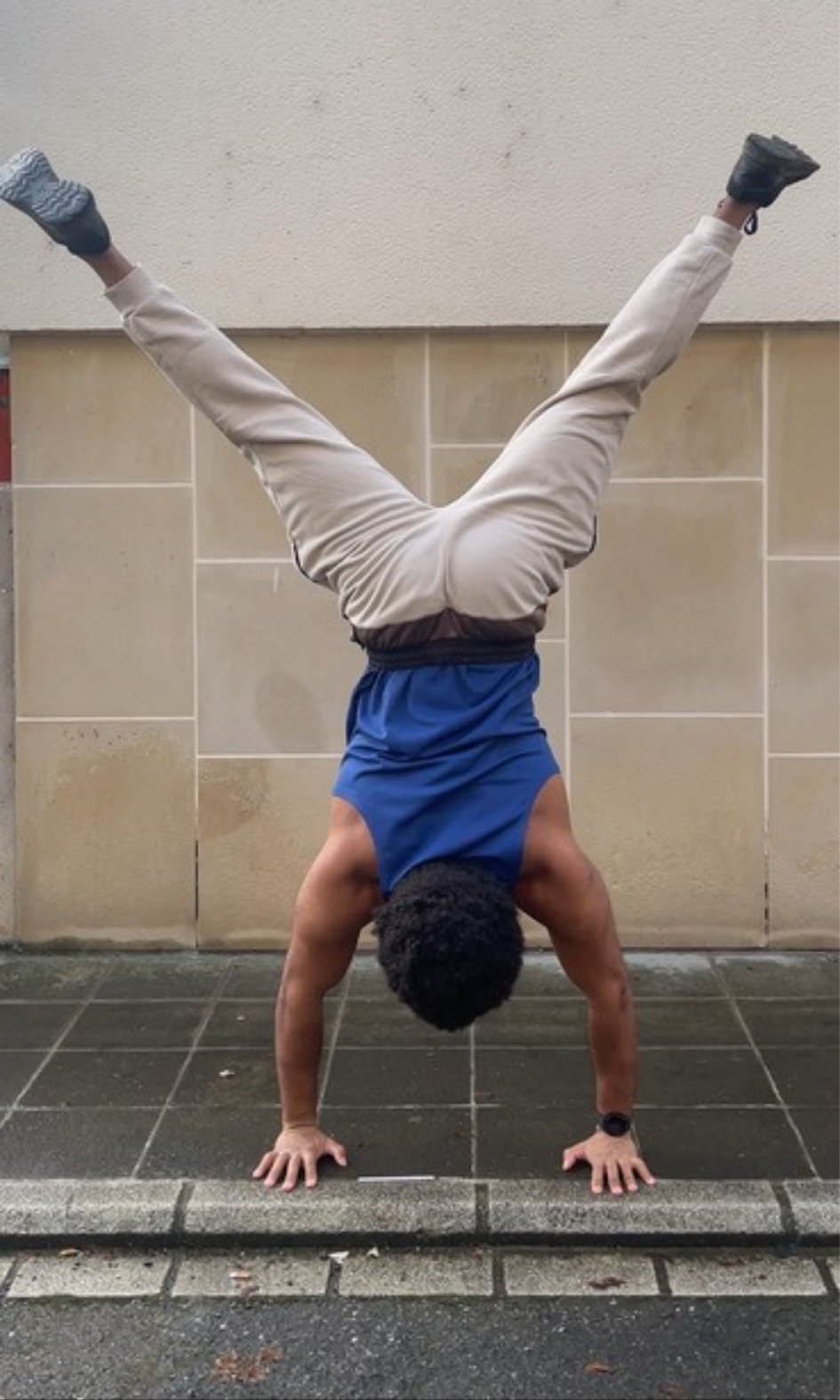
Follow a progression instead of jumping straight in: start with the frog stance to learn balancing on your hands, then the crow pose for core and shoulder-blade strength, then back-to-wall and face-to-wall handstand holds of up to 60 seconds. Add handstand wall walks for strength and control, use headstands for spatial awareness, and practice falling safely so fear never holds you back. Warm up your wrists before every session.
How do I learn an L-sit?+
Begin with tuck L-sit holds to get used to pressing down through your shoulder blades while keeping your abs engaged. Progress to a one-legged L-sit to expose more of your weight to gravity, then the full L-sit. Support the journey with dips for triceps and shoulder stability, ab crunches for compression strength, and leg raises for the hip and core strength the position demands.
How do I learn a muscle-up?+
Build explosive pull-up power first. Alongside heavy, slow repetitions, train pull-ups in the 6 to 12 rep range performed as fast as possible — this develops the speed and nervous-system drive the muscle-up transition needs. Don't fixate on one method: periodise your training and rotate your stimulus.
What can I do to improve my planche?+
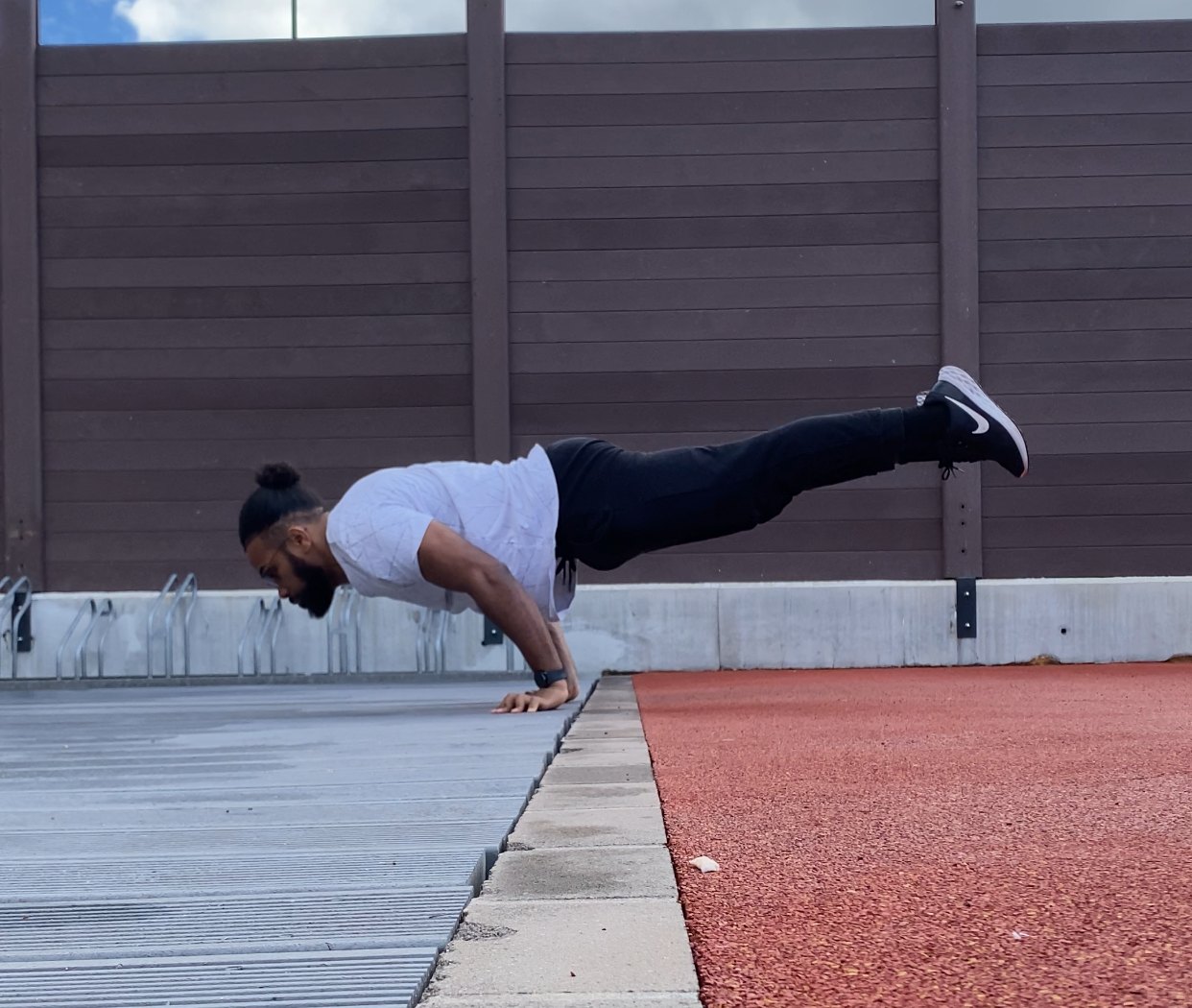
Work with regressions like the tuck planche and build up gradually instead of forcing the full position. Prepare your wrists and shoulder girdle before every session, keep your plan consistent, and judge progress by improved form and control — not just by holding the final skill.
Can I get big doing only calisthenics?+
Yes. Muscle growth comes from progressive overload, not from machines. Use harder exercise variations in the 4 to 8 rep range with slow, controlled reps for hypertrophy, or faster explosive sets of 6 to 12 reps to build strength and power — and periodise your training so it keeps working and stays exciting.
What benefits does exercise have for my mental health?+
Movement is one of the most accessible tools for mental wellbeing. Training helps with stress, anxiety and low mood, and the confidence you build by keeping promises to yourself carries over into the rest of your life. Combined with mindfulness practice, it becomes a powerful daily support for your mental health.
Why does breath work matter for my mental health?+
Meditation is typically coupled with breathing exercises for a reason: slow, deliberate breathing anchors your attention in the present moment. That non-judgemental awareness — noticing thoughts and sensations without fighting them — is exactly what helps calm stress and anxiety.
How does meditation help my body?+
Mindfulness and meditation are simple, free tools with real research behind them. They help with depression, anxiety and stress, and studies show moderate benefits for chronic pain conditions such as lower back pain, fibromyalgia, migraines and irritable bowel syndrome. It's not a magic pill, but it is worth giving it a try.
What is part of your coaching packages?+
My 1-on-1 coaching combines calisthenics strength and skill training with psychologically informed, behaviour-based coaching — so you get in shape, perform, and build the mindset to stick to your plan. You can book a single session or choose a package of 4, 9 or 14 sessions per month, and preventive training is built in to keep you injury-free.
Can I use the app when I book 1-on-1 coaching?+
Yes — the app is the perfect companion to your coaching. Between sessions you can follow guided video workouts, plan and track your training, and keep your nutrition on point, so the work we do together keeps progressing every day of the week.
What benefits do I get from subscribing to the app?+
The Basic membership gives you the on-demand workout library, the exercise planner and tracker, and community features. Premium adds unlimited personal workouts, exercise demonstrations, extra community challenges, and full nutrition support — a personalised nutrition plan, nutrition journal, tracking tools and a groceries planner.
What benefits do I get from subscribing to the group course?+
You train calisthenics together with others under my guidance — which means expert coaching, a community that pulls you along on low-motivation days, and a fixed appointment in your week that makes consistency almost automatic.
Where do your group courses take place?+
The calisthenics group workouts run in collaboration with NOJU.lu at the Ettelbrécker Jugendhaus in Ettelbruck — a great space run by Nordstadjugend, the Luxembourg youth organisation active since 1989.
How can I subscribe to the group courses?+
Just send me a message through the booking form below or email jair@physisus.com, and I'll get you signed up and tell you everything you need for your first session.
The coaching is too expensive for me — are there other ways to profit from your services?+
Definitely. The app memberships start at €20 per month and give you guided workouts, planning and tracking — and the group workouts give you coached calisthenics training in a community setting at a fraction of the 1-on-1 price. There's a way in for every budget.